The indoor pet emergency nobody budgeted for
The cat stays indoors, the dog rarely leaves the yard, and the monthly budget has no line for a veterinary emergency. Then a swallowed object, sudden breathing problem, or late-night fall turns routine care into a deposit, diagnostic tests, and treatment decisions made under pressure. Indoor living lowers exposure to traffic and fights, but it does not remove illness, accidents, or age-related problems.
That timing changes the insurance question. A recurring premium can feel wasteful during quiet years, yet a single emergency may cost more than many months of coverage. The immediate bill may also arrive before any reimbursement, leaving an owner to find cash or credit first. The financial risk is not simply whether something happens, but whether the household can absorb the cost when it does.
Low risk can still produce high costs
Even when the odds look favorable, the cost of the less likely event can dominate the calculation. An indoor cat may go years without more than vaccinations and dental care, then develop a urinary blockage, kidney disease, or cancer. A small dog that rarely roams can still tear a ligament jumping from furniture or need surgery after swallowing something unsafe. These events are not routine, but their price is often measured in thousands rather than hundreds.
That creates an uneven trade-off. Paying premiums for several quiet years may produce little visible benefit, especially after a deductible and reimbursement limit are applied. But skipping coverage does not make the risk disappear; it transfers the full bill to savings, a credit card, or a treatment decision made under time pressure. The useful comparison is therefore not premium versus average annual veterinary spending. It is the premium against the largest realistic bill the household could handle without delaying care. A policy may be poor value for predictable routine expenses yet still serve as protection against a financially destabilizing emergency.
The bill arrives before the insurance answer
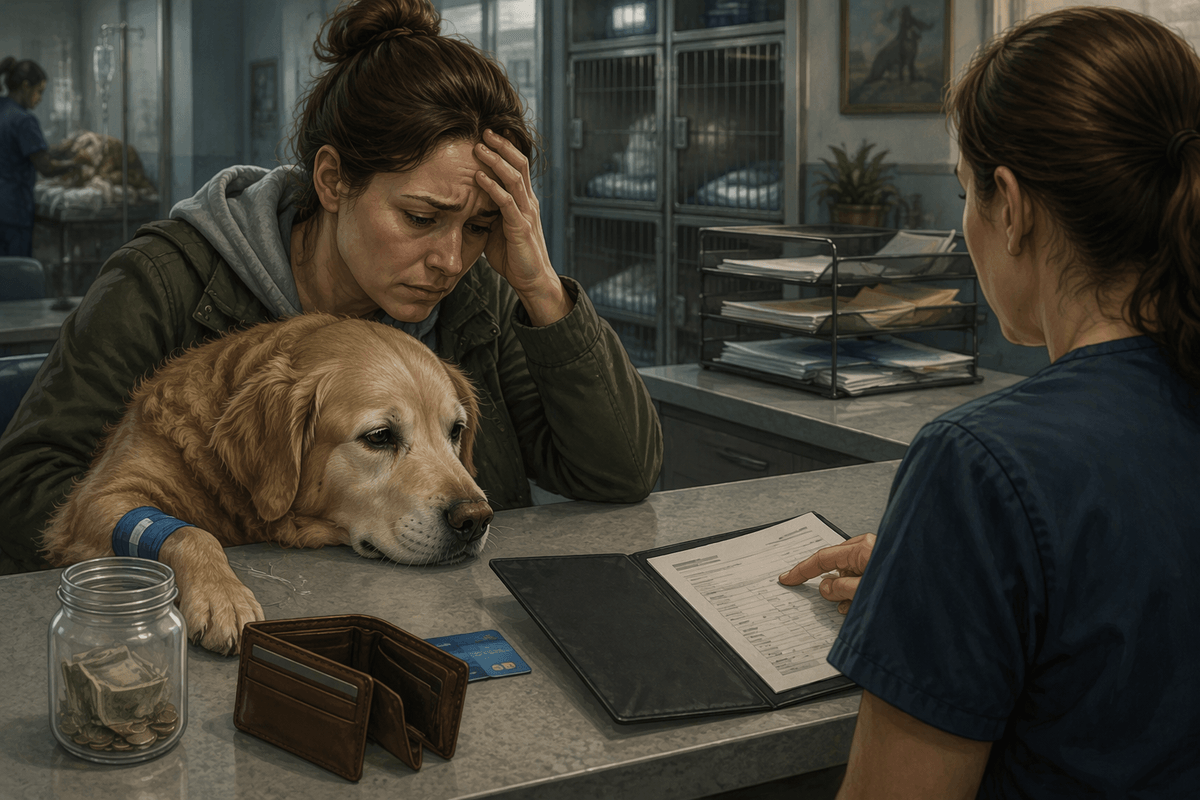
That distinction becomes harder at the clinic, where payment is usually due before an insurer reviews anything. An emergency hospital may require a deposit before imaging, surgery, or overnight monitoring begins. Even if the policy covers the treatment, reimbursement can take days or weeks, and the owner may need to pay the deductible, coinsurance, or excluded charges immediately. A household with a policy can still face a $2,000 or $5,000 cash requirement at the worst possible moment.
Reimbursement rules add another layer of uncertainty. Some plans calculate payment after the deductible, while others apply it to each condition or policy year. The eligible percentage may also exclude exam fees, taxes, medication, or the difference between the clinic’s charge and the insurer’s allowed amount. A policy that appears to cover 80% may therefore return much less than expected. Owners comparing plans should test the timing with a specific scenario: how much must be paid on the day of treatment, how long reimbursement may take, and whether available savings or credit can cover the gap. The protection only works smoothly when the household can finance the emergency first.
A policy can exclude the problem you fear
Even after the payment gap is understood, coverage may not apply to the condition that creates the largest concern. Most policies exclude pre-existing conditions, and the insurer may treat a symptom noted before enrollment as evidence that the problem began earlier. A recurring cough, occasional limp, skin irritation, or prior digestive issue can therefore affect future claims, even if the owner considered it minor at the time. Waiting periods can create a similar gap: an illness that appears shortly after enrollment may be excluded, while accidents may follow different rules.
Policy design matters as much as the headline reimbursement rate. Some plans exclude hereditary conditions, dental disease, behavioral treatment, prescription food, or exam fees unless an optional feature is added. Annual limits, per-condition limits, and bilateral-condition clauses can reduce protection further; a knee problem on one side may affect coverage for the other. The practical test is to read the exclusions against the pet’s age, breed, medical history, and likely future care. Paying premiums for years offers limited value if the most probable expensive condition was excluded from the start. That does not make insurance useless, but it narrows the protection to risks the policy is actually willing to cover.
Self-funding looks simpler until savings fall short
That narrower protection can make self-funding seem cleaner. Instead of paying a premium for coverage that may exclude a known concern, an owner can place the same amount into a separate emergency account and keep control of the money. The approach avoids claim forms, reimbursement delays, and disputes over medical definitions. It also works well when savings are already substantial and the pet has few years of likely high-cost care ahead.
The weakness appears when the emergency happens before the account has time to grow. Saving $75 a month produces only $900 after a year, which may not cover advanced imaging, hospitalization, or surgery. Routine expenses can also quietly reduce the balance, and a household facing rent, repairs, or job loss may borrow from the fund before it is needed. Self-funding is therefore not simply the cheaper option; it requires enough starting capital, steady contributions, and discipline to leave the money untouched. Without those conditions, the owner may carry the full risk while believing a modest balance provides meaningful protection.
The right choice changes with timing and tolerance

That makes timing as important as price. Enrolling a young, healthy pet usually offers the broadest chance of coverage, before symptoms become exclusions and before premiums rise with age. Waiting can preserve cash during the quiet years, but it may also leave fewer acceptable policies later. A household that can already cover a large emergency may prefer self-funding, while one with limited savings may value insurance even if the long-term payout is uncertain.
Tolerance for financial shocks separates the options more clearly than average veterinary spending. Someone able to absorb a $5,000 bill without borrowing may accept the risk of paying premiums that produce no claim. Someone who would need credit, delay treatment, or choose a cheaper medical option faces a different calculation. The decision can also change as the pet ages, savings grow, or a new diagnosis alters what insurance will cover. There is no fixed winner; the better fit depends on when protection begins and how much uncertainty the household can carry.
Choose the risk you can realistically carry
The decision becomes clearer when reduced to the risk the household can actually carry. Compare the annual premium with the cash available today, not an ideal future savings balance. Then test a realistic claim: a $4,000 emergency, the deductible, the uncovered share, and several weeks before reimbursement. If that gap would require borrowing or delaying treatment, insurance may earn its place even after years of limited claims. If the household can pay the bill comfortably and maintain a dedicated reserve, self-funding may offer more control.
Neither choice removes uncertainty. Insurance trades flexibility and recurring cost for a defined layer of protection; self-funding trades that protection for retained savings and full responsibility. The stronger option is the one that still works during a bad month, not merely the one that looks cheapest in a healthy year.