You’re About to Apply, Then a Surprise Alert
The week a mortgage pre-approval is supposed to feel straightforward, the credit side has a way of getting noisy. A notification pings: a new inquiry you don’t recognize, a balance jump that doesn’t match your card app, a score drop that seems too sharp to be normal. The timing is the problem. Lenders don’t care that it’s “probably a mistake” if it changes the rate tier or forces a re-run of underwriting. Even if the alert is harmless, it can still cost time—phone calls, documentation, waiting for updates to post—right when the loan officer is asking for clean, stable credit.
That’s usually the moment people start pricing credit monitoring: not out of curiosity, but because the next 30–60 days suddenly feel expensive to leave to chance.
Your expectation: instant fraud protection for $20
So the $20/month pitch lands cleanly: pay a small, predictable amount and get immediate protection while your file is under a lender’s microscope. In your head it behaves like a fraud lock—anything sketchy gets blocked, you get a text, and the damage stops before it reaches your reports. With a closing date floating in the background, that’s an appealing trade: a minor subscription cost versus the possibility of a rate bump or a delayed approval.
What the marketing doesn’t emphasize is the operational expectation you’re buying. “Monitoring” sounds like prevention, but most services are built around detection speed and notification reliability. Even fast alerts can still mean you’re the one filing disputes, placing freezes, calling creditors, and documenting timelines—work that competes directly with the underwriting window you’re trying to protect.
The mismatch: what monitoring can’t stop
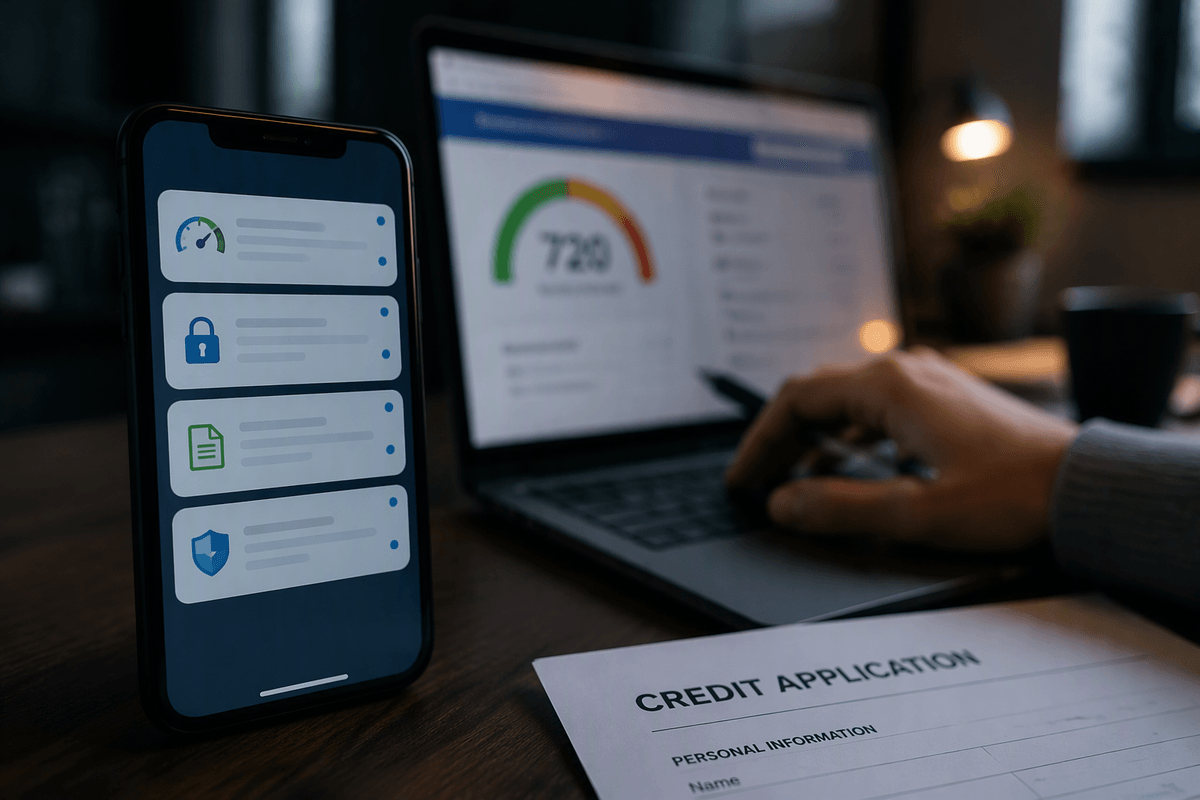
The mismatch shows up the first time you read the fine print after you’ve already started paying: the subscription is mostly a sensor, not a lock. It can tell you an inquiry posted, a new account appeared, or a bureau score moved, but it usually can’t prevent the creditor from pulling your file in the first place. If someone has enough of your data to apply, the “stop” step still tends to be a freeze at the bureau level, a fraud alert, and direct contact with the issuer—none of which the monitoring service can complete on your behalf.
That gap matters most during borrowing because the timeline is tight. A same-day text doesn’t erase the fact that bureaus update on their own schedules, creditors take days to investigate, and disputes can move slowly. Meanwhile the lender’s version of your score can be a different model than the one you’re watching, so you can feel “covered” while underwriting is reacting to a score, inquiry, or tradeline you can’t immediately unwind.
When paid alerts matter during big borrowing
It’s still not nothing, though. During a mortgage or refi window, the value of paid monitoring is less “stopping fraud” and more compressing the time between a change and your response. If an unexpected inquiry hits on a Tuesday and your lender is re-pulling credit on Thursday, a fast, reliable alert can be the difference between catching it early enough to freeze the right bureau and getting blindsided on the re-run. The constraint is obvious: disputes don’t resolve in 48 hours, so the only lever that matters is how quickly you find out and how cleanly you can document what happened.
Paid alerts matter most when you expect movement and need receipts. Think rapid balance swings from a card you’re actively using, a new installment loan you’re rate-shopping, or an employer change that triggers more scrutiny. In those cases, monitoring that shows bureau-level changes (not just one score) can help you separate “normal reporting noise” from the one item that will derail underwriting—while there’s still time to pause applications, move spending, or ask the loan officer what their model is actually reacting to.
Feature checklist that separates real value
The hard part is that most services look identical until you’re the one trying to prove what changed and when. When you’re paying during a borrowing window, the features that matter are the ones that reduce back-and-forth with bureaus, creditors, and your loan officer—because the constraint isn’t “awareness,” it’s time and clean documentation.
Start with coverage and timing: does it monitor all three bureaus, and are the alerts near real-time or batched? Then look for bureau-file detail, not just a single “score”: inquiry alerts by bureau, new-account/tradeline alerts, balance/limit changes, address/employer changes, and whether it shows the actual report line item so you can screenshot it. Score tracking is only useful if it includes the model family lenders tend to use (for mortgages, many consumer apps show a different model), or at least makes the model difference explicit so you don’t chase the wrong “drop.”
Finally, separate help from hype. A clean value stack is: identity restoration with a named case manager, reimbursement terms you can actually meet, and a clear workflow (who to call, what letters they generate, what they won’t do). If the “extras” are mostly dark-web scans, generic insurance, or weekly score emails, you’re buying comfort—not leverage—right when every day of delay can cost rate, approvals, or both.
Decide based on your risk and timeline

Once you know what the service can’t block, the decision starts looking less like “is this worth $20?” and more like “what’s the cost of being late to bad news?” If you’re inside a defined underwriting window—say pre-approval to close in the next 30–60 days—speed and proof start to matter more than the monthly fee. A single unrecognized inquiry, a new address, or a surprise utilization spike can force lender questions the same week, and the practical constraint is that fixes don’t move at lender speed.
If borrowing is 6–12 months out, the math flips. The biggest risk becomes paying for months of alerts that don’t change your behavior, while the real protection (freezes, account security, and keeping utilization stable before applications) is already available without a subscription. Paid monitoring tends to earn its keep when either (a) you have elevated exposure—recent data breach, prior identity theft, lots of shared accounts—or (b) you’re about to be graded by a lender again and want a three-bureau paper trail fast enough to act on.
A practical default: freezes first, pay selectively
At the point where you’re paying for “speed,” it’s worth locking down the one lever that actually prevents new credit activity: freeze all three bureaus first, then thaw only when you’re rate-shopping or a lender tells you they need access. It’s free, it works even if your phone is off, and it removes the false comfort that an alert equals protection. The friction is real—PINs, logins, and timing—but it’s the kind of hassle that’s cheaper than a surprise inquiry mid-underwriting.
Then pay selectively, on purpose. If you’re inside that 30–60 day borrowing window, a short subscription can make sense for three-bureau, fast inquiry/tradeline alerts and clean report detail you can screenshot for your loan officer. Outside that window, keep the freeze, use free report access, and skip the monthly bill unless you’ve had a prior ID-theft issue or expect frequent legitimate credit movement.