Why St. Helena Island Requires More Than Sightseeing
The first mistake is treating St. Helena Island as a collection of scenic stops. Its significance is rooted in living Gullah Geechee heritage, so a meaningful visit needs time for interpretation rather than quick photographs and a checklist. Penn Center is the logical anchor: the former Penn School connects the island’s history of educating formerly enslaved people with cultural preservation today. That makes even a half-day worthwhile, provided you focus instead of trying to cover the island.
A full day gives more room to add a landscape experience such as Capers Creek, but it also requires transportation, energy, and flexibility. Visitors without a car may have a Beaufort–St. Helena connection through Route 502, though current timing and stops should be confirmed before relying on it. The practical question is not how many attractions fit, but whether your schedule leaves enough space to listen, learn, and support community-rooted interpretation.
Begin at Penn Center
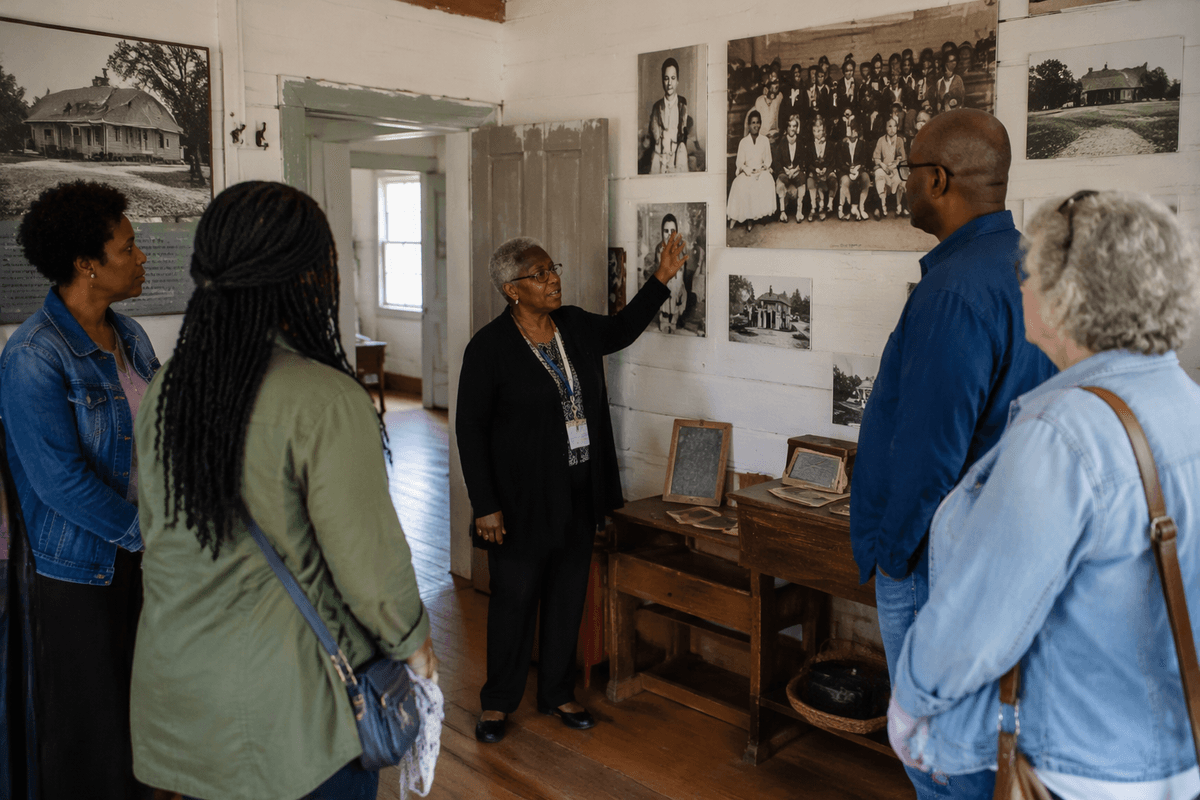
Start at Penn Center before deciding how much more of St. Helena Island you can reasonably cover. The former Penn School grounds provide essential context for the island’s Gullah Geechee heritage, making them more useful than beginning with scattered scenic stops. A self-guided visit works well when your schedule is tight or you prefer to move quietly through the museum and historic campus, but it places more responsibility on you to connect what you see with the institution’s wider history.
If learning is the main reason for coming, a docent-led visit is usually the stronger choice. Historical interpretation, a documentary, and time for questions can turn an hour of looking into a more grounded conversation, though scheduled tours may not fit neatly into a half-day from Beaufort. Check Penn Center’s current Tuesday–Saturday hours, admission details, and tour availability before leaving. If you are traveling without a car, confirm Route 502 timing and stops as well; a missed connection can quickly turn a focused visit into a long wait with little flexibility left for the island.
Choose Self-Guided or Docent-Led Learning
The choice between self-guided and docent-led learning depends less on price than on how much interpretation you need. Self-guided admission suits a short visit, an unpredictable bus arrival, or anyone who wants time to absorb the grounds without staying on a fixed schedule. It is also easier to combine with a later walk, but the experience can remain fragmented if you are unfamiliar with Penn School’s history.
A docent-led tour is the better use of a full day—or of a half-day planned around one meaningful experience—because historical interpretation, a documentary, and questions create connections that labels alone may not. The limitation is timing: a scheduled tour can narrow your margin if Route 502 runs late or you are traveling from Beaufort. Reserve or confirm availability before setting out, then treat the tour as the day’s anchor rather than squeezing it between unrelated stops.
Add Capers Creek or Island Time
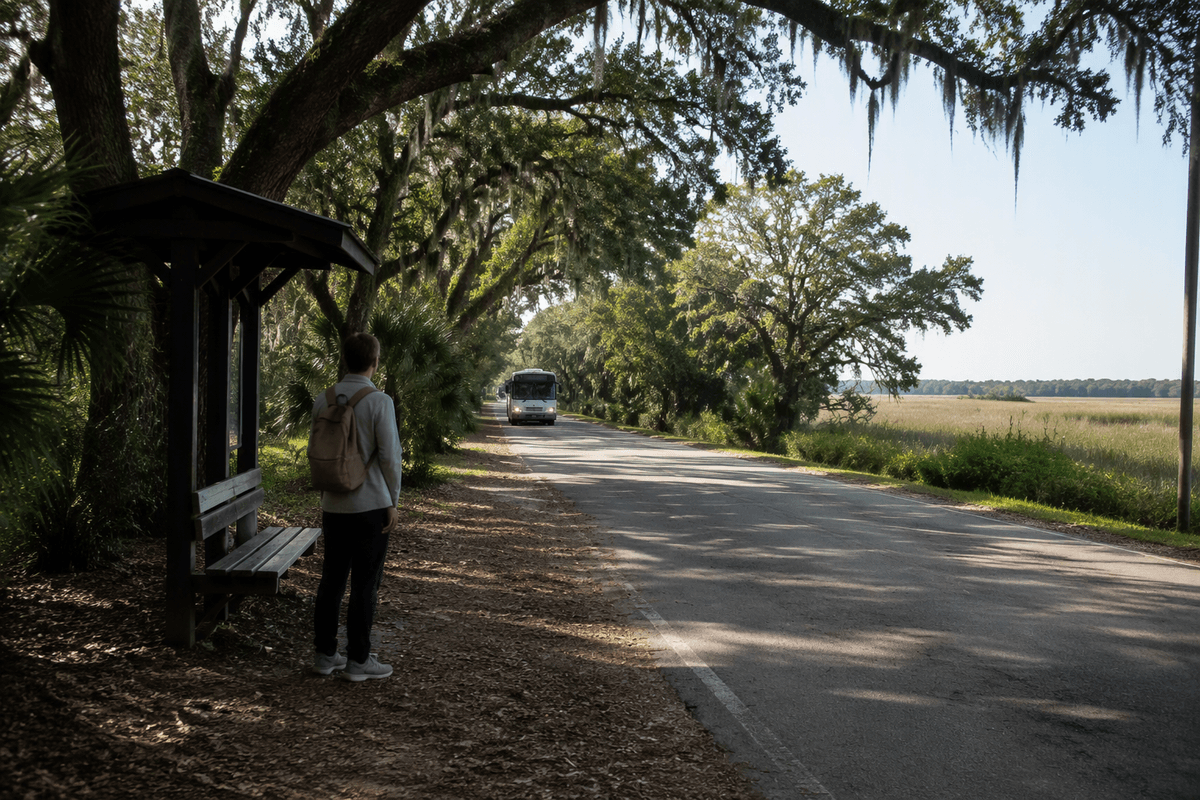
Once Penn Center has given the day its context, Capers Creek is a sensible addition if you still have energy and daylight. The National Park Service describes it as an easy, 0.5-mile out-and-back trail, but the short distance does not make it a substitute for interpretation. Its value is in slowing the visit down: local waterways connect to Gullah Geechee culture and seafood traditions, so the walk works best after learning about the island rather than as a scenic detour taken in isolation. In hot, wet, or buggy weather, however, staying on the Penn Center grounds may be the more comfortable choice.
With a car, you can allow time for the trail without making the schedule brittle. Without one, “island time” may mean simply leaving space for conversation, the museum, or a quiet pause instead of adding another destination. Route 502 may connect Beaufort and St. Helena Island, but verify current timing and stops before building in Capers Creek; a missed return can erase the flexibility that makes a half-day visit work.
Plan Transportation and Practice Respect
Transportation should shape the visit before the attractions do. Route 502 offers a possible Beaufort–St. Helena connection, but a bus-based plan has little room for missed departures, long waits, or an extra stop added on impulse. Check the current schedule, stops, and return timing before leaving, then make Penn Center the fixed point. A half-day works best when you arrive with enough time for one substantial experience; a full day is more realistic if you want Capers Creek or unplanned conversation.
Respect also means resisting the urge to interpret the island from a distance. Stay with community-rooted institutions, follow photography and access guidance, and do not assume one museum, landscape, or interaction represents every Gullah Geechee experience. Buying admission, a book, or locally offered interpretation is more constructive than treating residential roads and private spaces as scenery. The visit becomes thinner when you rush, but it becomes extractive when you collect images without context.
Leave With Context, Not Just Attractions
By the time you leave, the strongest measure of the visit is not how many stops you checked off, but whether Penn Center helped you understand St. Helena Island as a living Gullah Geechee community. A half-day can be enough when it centers on one substantial experience; a full day earns its value only if you have time to move slowly and adjust.
Verify hours and Route 502 timing before traveling, then let context—not efficiency—set the pace. If that means skipping Capers Creek, waiting for a docent-led tour, or supporting Penn Center through admission or purchases, the visit is likely more meaningful for it.