The Renewal Notice Arrives Before Your Next Payday
The renewal email arrives on Tuesday. Payment is due Friday; payday is still a week away. There is money in checking, but most of it already has a job: groceries, utilities, and the rent payment waiting to clear. The renewal is familiar. Its timing still catches the household short.
Paying it now means squeezing the rest of the week. Putting it on a card protects the checking balance but leaves another payment to cover later. Before choosing, it helps to look beyond this notice. Other bills may be approaching quietly, absent from the monthly budget simply because they do not arrive every month.
Find the Bills Your Monthly Budget Misses
Open the past year’s bank and card statements and look for payments that disappeared from view after they cleared: vehicle registration, annual subscriptions, school fees, insurance renewals. Check renewal emails and the household calendar alongside them. Statements show what was paid, but they will not reveal a new membership or the school trip expected next spring. A full year matters; checking only recent months can leave an entire season out.
Put each expense on a short list with its last known amount and next likely due date. Mark estimates rather than treating them as settled bills, and check whether an annual charge is already included in the monthly budget before counting it again. For recurring costs such as holiday spending, use last year’s total as a starting point. The list now shows not just what needs funding, but how soon the money will be needed.
Why Dividing by Twelve Can Leave You Short
Two bills with the same annual cost can need very different amounts from the next paycheck. A $600 renewal due in twelve months calls for $50 a month if nothing is saved yet. But if it arrives in four months, that same contribution will leave only $200 ready. Dividing by twelve shows the ongoing cost; it does not account for the shorter time available when saving begins.
For each bill, subtract whatever is already set aside, then divide the remaining amount by the number of contributions possible before payment. If that $600 renewal has $200 saved and four monthly deposits left, the amount needed is $100 per deposit. Count the actual paydays, not just the calendar months. A bill due on the third cannot use money arriving on the fifteenth, even though both dates fall in the same month.
Keep this first round separate from the longer-term plan. Once the renewal is paid, a full twelve-month saving period brings the contribution back to $50, assuming the price stays unchanged. Until then, the higher amount is a catch-up need, not a permanent monthly cost. Adding those catch-up amounts may reveal that the bills are predictable, but the available income cannot comfortably cover them all yet.
What If the Monthly Total Is Unaffordable?

If the total leaves too little for groceries, housing, and other current bills, do not set up transfers at that amount and hope the month works out. Put the available amount beside the saving target. A $250 target with only $150 available leaves a $100 gap; moving money between categories will not close it unless some spending actually changes.
Work through the list by consequence and deadline. Keep required bills ahead of optional renewals, then look for costs that can be reduced, cancelled, or postponed before payment is due. A subscription might come off the list entirely. Seasonal spending might need a smaller limit. For a bill that must stay, ask whether a different payment schedule is available and check its total cost. Smaller payments may fit the household’s cash flow better, but any added fees still need room in the budget.
Recalculate after those decisions, using amounts the household can sustain rather than an unusually cheap month. If a gap remains, name the bill still short and the deadline for resolving it. That makes the next decision specific: find a workable reduction or arrange payment terms, rather than quietly assuming future paychecks will stretch further.
Leave Room for Prices You Cannot Predict
A workable total still rests on estimates. Last year’s premium or school costs may be the best starting point available, but saving exactly that amount leaves no room for an increase. Mark which figures are confirmed and which could change, so an estimate does not quietly become a promise.
For uncertain bills, choose a little extra that fits alongside current essentials. Planning for $660 rather than last year’s $600 adds $5 to each monthly contribution over a full year. That is a cushion, not a prediction. If even that extra amount makes the budget too tight, keep the uncertainty visible and set a reminder to check the price before renewal.
When a notice arrives, replace the estimate with the actual amount and recalculate across the paydays remaining. Check the deadline too; an earlier payment date can leave less time to save even without a price increase. Keep any unused cushion available until the bill clears, rather than treating it as spare spending money.
Make Payday Contributions Easy to Keep Separate
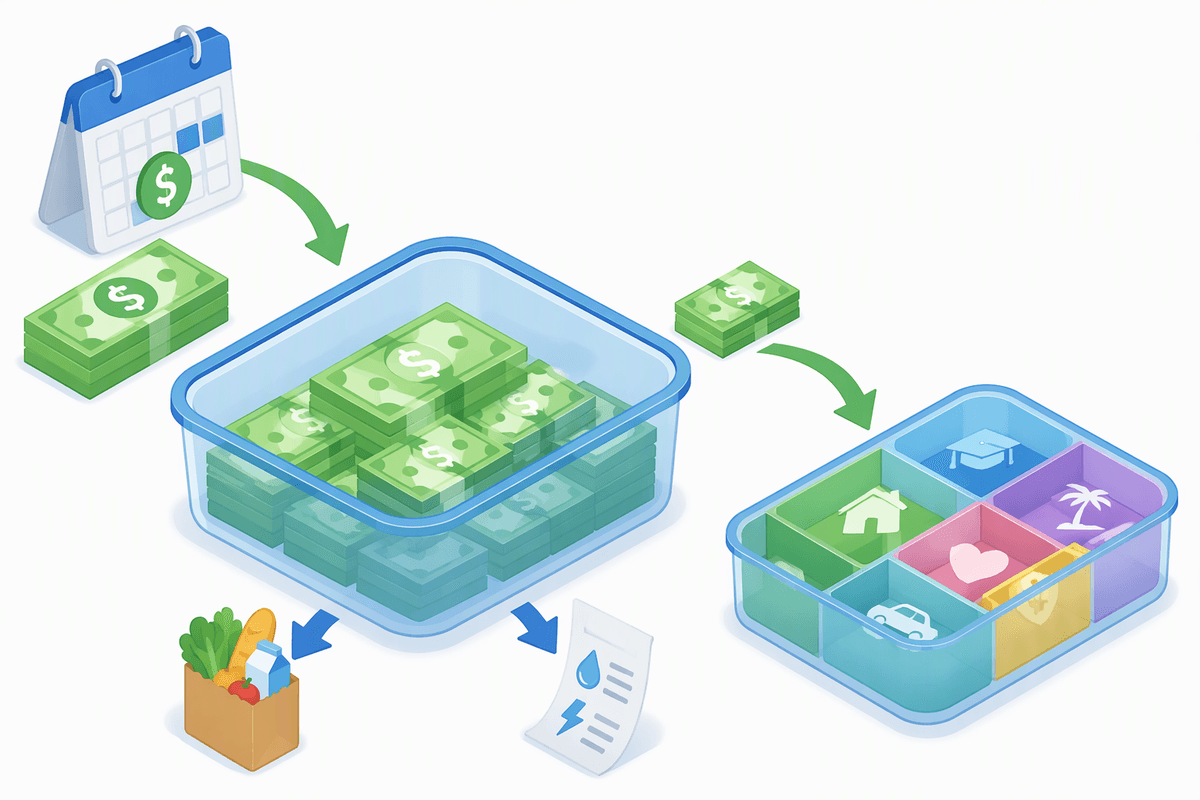
A checking balance can look generous when part of it is already promised to a renewal. Give that money a separate place: a savings account without added fees, or clearly labelled categories in the household’s budget. One account can hold several bills, provided the record shows how much belongs to each.
Schedule contributions after pay has arrived, using the amount worked out for each payday. Avoid transfers timed ahead of the deposit; groceries and automatic payments still need enough in checking. If money stays in the same account, subtract the reserved total before deciding what is available to spend. Check the amounts after each bill clears, before the next contribution goes through.
Start With the Next Bill, Then Expand
If funding the whole list at once is too much, begin with the next required bill. Set aside what fits after essentials, and check whether that pace will cover it by the deadline. Any remaining gap still needs a decision; starting small does not make the shortfall disappear.
After that bill clears, keep its next renewal funded at the lower, full-year amount. Add another expense when there is room, rather than committing the same money twice. The first payment may still feel tight. Progress is having fewer bills arrive unfunded—not having every annual expense fully provided for from the first payday.